



Introduction
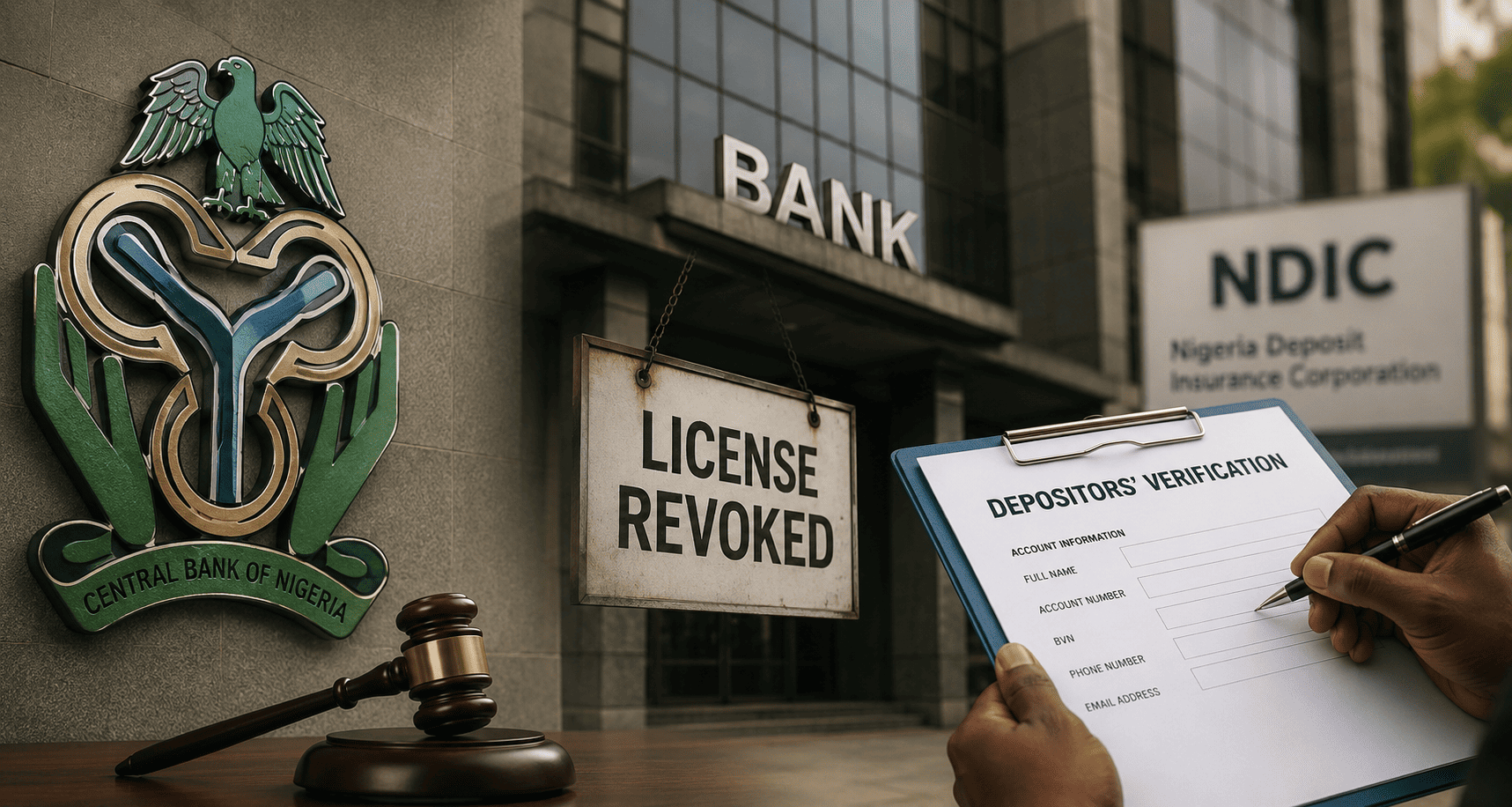
On 1 July 2026, the Central Bank of Nigeria (CBN) revoked the operating licences of forty‑six (46) Microfinance Banks for persistent regulatory breaches and failure to meet the minimum conditions for continued operation under BOFIA 2020. Revocation requires the affected institutions to cease all banking operations, after which their assets, liabilities, and depositor funds become subject to regulatory administration.
On 9 July 2026, the Nigeria Deposit Insurance Corporation(NDIC) announced the commencement of enforcement activities to take possession of the assets, records, and properties of the defunct banks and begin depositor verification.
This newsletter outlines NDIC’s statutory role, the verification process, and the implications for banks, depositors, and stakeholders.
Role of the NDIC
The NDIC operates Nigeria’s deposit insurance system to protect depositors and promote stability in the financial system. When a bank becomes insolvent or its licence is revoked, the NDIC guarantees payment of insured deposits and ensures orderly resolution.
Following licence revocation, the NDIC is appointed by the CBN Governor as liquidator of the failed institution. Under BOFIA 2020 (s.12(2)) and NDIC Act 2023 (ss.55 & 62), the NDIC exercises all powers of a liquidator, including taking possession of assets, recovering debts, verifying claims, and settling insured deposits. For liquidation purposes, NDIC may apply relevant provisions of CAMA 2020.
Depositor Verification Procedure
According to NDIC’s public notice, depositors of the affected Microfinance Banks will be verified through the following channels:
- BVN‑Linked Accounts: Depositors whose accounts were linked to their Bank Verification Number (BVN) will be paid automatically through their alternate bank accounts.
- Physical Verification (Proof of Ownership)
Depositors without BVN‑linked accounts must visit the bank’s premises with:
- Proof of account ownership,
- Passport photograph,
- Valid identification (Driver’s licence, PVC, International passport, or National ID), and
- Bank verification number (BVN).
- Filing Claims with NDIC: Depositors may also submit claims directly via the NDIC website or by visiting NDIC offices nationwide.
Implications for Banks, Depositors & Stakeholders
- Cessation of Banking Operations
The defunct banks are no longer authorised to conduct any banking business. All transactions are halted.
- Deposit Insurance Limits
For Microfinance Banks, NDIC will pay up to ₦200,000 per depositor, in line with Section 25 NDIC Act 2023.
Multiple accounts held by one depositor in the same bank will be merged for insurance purposes.
- Loan Obligations Remain Enforceable
Revocation does not extinguish outstanding loans. These form part of the bank’s recoverable assets under NDIC administration.
- Compliance Risk for Operating Banks
Active financial institutions should reassess compliance with CBN regulatory requirements, including licence conditions, capital adequacy, and deposit insurance coverage.
In conclusion, the NDIC’s intervention ensures orderly resolution of the failed Microfinance Banks and protection of depositors. Affected customers are encouraged to promptly complete verification to facilitate payment of insured deposits. Banks and financial institutions should take this development as a reminder to strengthen regulatory compliance and maintain robust operational standards essential for continued licensing.
This newsletter by Manifield Solicitors is provided for general information purposes only and does not constitute legal, regulatory, or professional advice. While reasonable care has been taken in preparing this publication, readers are advised not to rely on its contents as a substitute for specific legal advice. Institutions and individuals are encouraged to consult their legal, compliance, or other professional advisers to obtain advice tailored to their particular circumstances.




Add your first comment to this post