

Introduction
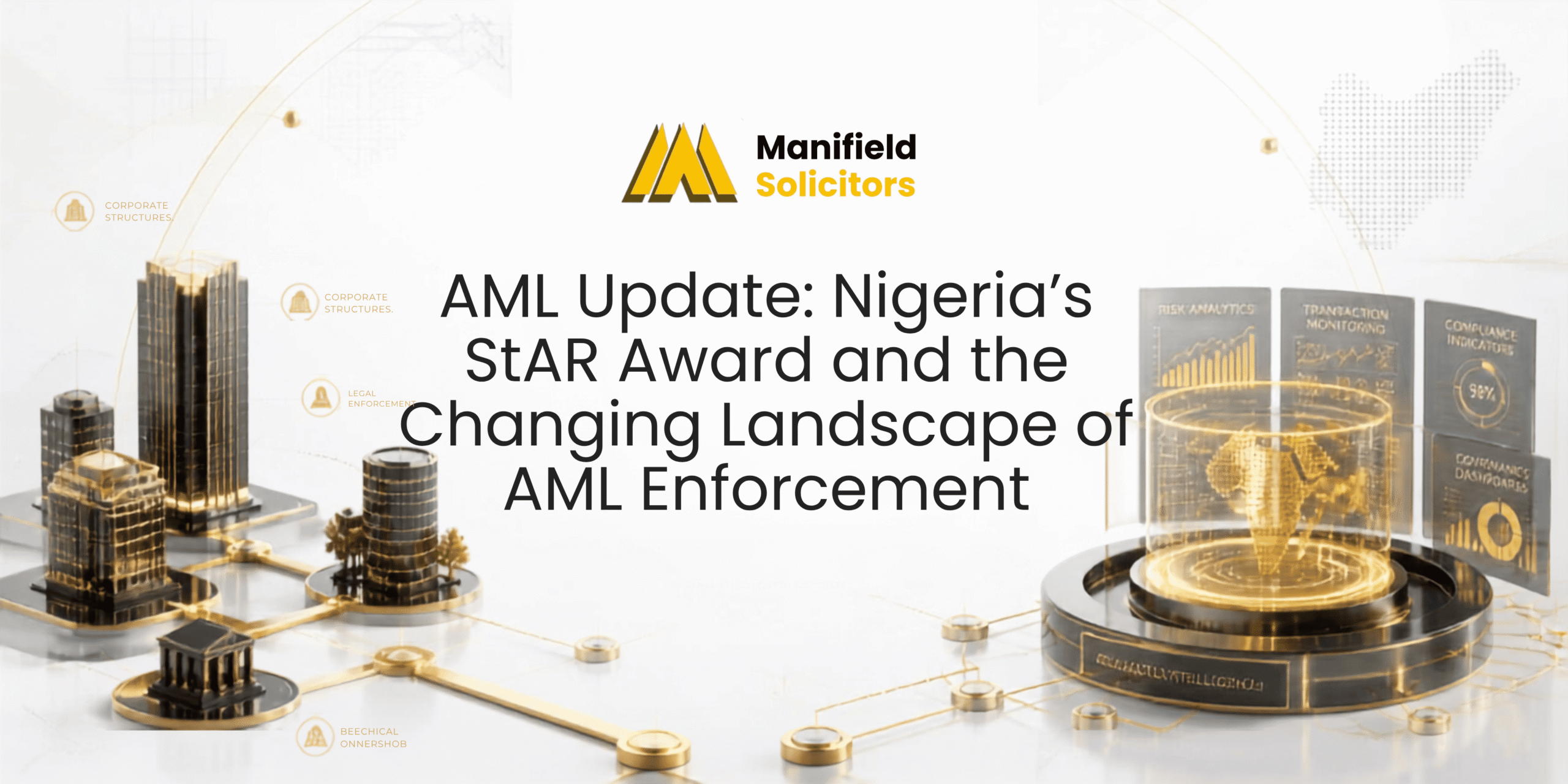
Just months after Nigeria successfully exited the Financial Action Task Force (FATF) grey list in October 2025, the Nigerian Financial Intelligence Unit (NFIU) (the agency) was awarded the UNODC-World Bank-Egmont Group Stolen Asset Recovery (StAR) initiative award in recognition of the successful efforts in investigating and combating financial crimes. The award recognises the agency’s recent asset recovery, made in collaboration with the Economic and Financial Crimes Commission (EFCC) in which timely financial intelligence and disciplined inter-agency cooperation led to a successful investigation, the disruption of an illicit financial network, and the recovery of stolen assets.
The StAR award underscores Nigeria’s growing standing in global financial intelligence in investigating, combating and enforcing financial crimes. Beyond the recognition, the award reflects Nigeria’s growing commitment to strengthening its anti-money laundering framework, enhancing asset recovery efforts, and aligning with international best practices. Businesses should therefore view this development not merely as an accolade, but as an indication of evolving regulatory expectations.
This newsletter provides an overview of financial crimes in Nigeria, the steps taken towards the enforcement of AML and financial crimes, and their effect on stakeholder companies.
Overview
Financial crimes such as fraud, money laundering, terrorist financing and bribery & corruption exist to stunt economic growth, break down financial service systems, and incur large-scale financial loss for businesses and individuals.
NFIU operates as an autonomous unit within Nigeria’s Anti-Money Laundering, Counter-Terrorist Financing, and Counter-Proliferation Financing (AML/CFT/CPF) framework. However, the NFIU effectively collaborates with other financial crimes agencies such as the EFCC, the Central Bank of Nigeria (CBN) and others in issuing guidelines, policies, investigation, enforcement, creating an effective framework in regulating financial crimes in Nigeria. NFIU also functions in the global landscape in combating money laundering and financing terrorism as outlined in the Financial Action Task Force (FATF) 40 Recommendations. This provides NFIU with the platform for the sharing of expertise and financial intelligence with other financial intelligence units.
Nigeria’s Evolving AML Framework
Nigeria has a robust framework for the implementation of AML/CFT/CPF measures. These measures are based on a comprehensive legislative and regulatory framework and are implemented via a broad range of institutional mechanisms. Over the years, several laws, policies, and guidelines have been consistently enacted to regulate businesses, financial services, financial transactions, and financial institutions in Nigeria.
- Money Laundering (Prevention and Prohibition) Act 2022i.
- Terrorism (Prevention and Prohibition) Act 2022.
- Proceeds of Crime (Recovery and Management) Act 2022.
- Mutual Legal Assistance in Criminal Matters Act 2019 (MLACMA)ii
- Nigerian Financial Intelligence Unit (Establishment) Act 2018.
- Companies and Allied Matters Act 2020 (CAMA)
Emerging Trends Shaping AML Enforcement
- Increased use of technology in AML supervision: Technology has had a greater effect in financial services, and in the financial sector. Regulators are increasingly leveraging technology, data analytics, and digital reporting tools to detect suspicious transactions, monitor compliance, and strengthen regulatory oversight.
- Beneficial ownership transparency: Greater emphasis will be placed on verifying the true ownership and control of corporate entities to prevent the misuse of shell companies and complex ownership structures. This is evident in section 119 CAMA 2020 wherein companies are required to disclose and register persons with significant control (PSC) upon attaining such status.
- Increased Scrutiny of Digital Assets and Emerging Financial Technologies: As virtual assets, fintech innovations, and digital payment platforms continue to grow, regulators are likely to introduce enhanced oversight to address evolving money laundering risks.
- Risk-Based Supervision: Regulators are expected to intensify risk-based supervision by directing greater oversight towards sectors, businesses, and transactions that present higher money laundering and terrorist financing risks. This is evident in the CBN’s initiative in providing guidelines on ringfencingoperation of closely linked entities in the Nigerian financial system. The guidelines establish legal, operational, and financial boundaries between affiliated entities to prevent contagion risk and regulatory arbitrage.
- Increased scrutiny of cross-border transactions: With the increased transnational transactions, there will be a need for integrated and cooperative international regulatory scrutiny in ensuring the control and regulation of ML and financial crimes.
Key Takeaways for Businesses
The fight against money laundering and financial crimes does not depend on the government’s regulatory authorities or regulatory agencies alone. Businesses, fintech companies and financial institutions have a responsibility to ensure smooth enforcement and compliance with existing regulatory standards.
- Enhance Customer Due Diligence (CDD) and Know Your Customer (KYC) Processes
- Strengthen Corporate Governance and Board Oversight
- Invest in Staff Training and Awareness in evolving AML obligations
- Monitor Regulatory Developments Continuously
- Review AML/CFT policies and procedures.
AML and financial crimes enforcement are usually applied to specific industries, including banking and finance, fintech, oil and gas, real estate, and professional services such as the legal industry
Conclusion
AML enforcement is evolving. The introduction of virtual assets and an increasing use of technology in financial transactions necessitated several policies and security measures in monitoring, verification, identification, and regulation. Over the past few months, the Central Bank of Nigeria (CBN) has taken proactive steps to building a strong financial regulatory system ensuring compliance, transparency, integrity and enforcing sanctions on technology standards and protecting the Nigerian digital economy.
Nigeria’s award at the Egmont Group plenary was only the visible starting point of a much larger, still-unfolding overhaul of how the country legislates against, supervises, and prosecutes financial crime. Thus, stakeholders are advised to ensure AML/CTF regulatory compliance and keep to date with modern and current AML practices for effective business operations.
This newsletter is provided for general information purposes only and does not constitute legal, regulatory, or professional advice. While reasonable care has been taken in preparing this publication, readers are advised not to rely on its contents as a substitute for specific legal advice. Institutions and individuals are encouraged to consult their legal, compliance, or other professional advisers to obtain advice tailored to their particular circumstances before taking any further steps.



Add your first comment to this post