



Introduction
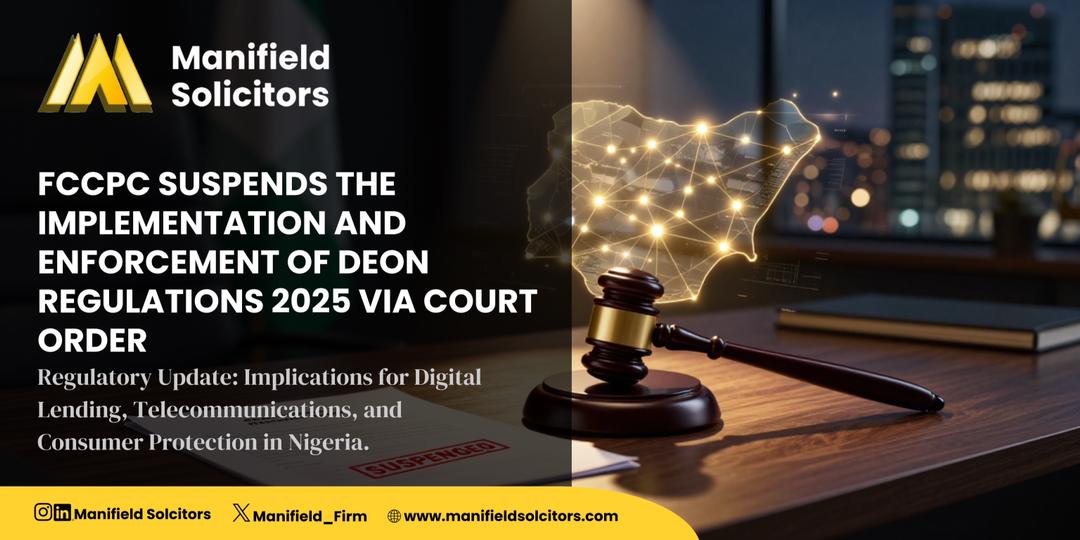
Nigeria’s regulatory landscape for consumer protection continues to evolve as regulators seek to address the challenges arising from digital commerce, online platforms, electronic transactions, and other technology-driven services. In line with its consumer protection mandate, the Federal Competition and Consumer Protection Commission (FCCPC) introduced the Digital, Electronic, Online and Non-Traditional Consumer (DEON) Regulations 2025to regulate consumer-facing activities conducted through digital and non-traditional channels.
However, the implementation of the Regulations recently encountered a significant legal challenge. The Federal High Court sitting in Lagos granted an interim order restraining the FCCPC from enforcing the DEON Regulations against telecommunications service providers pending the determination of the substantive suit before the Court.
This development has generated considerable interest among stakeholders within the telecommunications, digital lending, and consumer protection sectors. This newsletter examines the background to the DEON Regulations, the court’s intervention, the underlying regulatory dispute, and the implications of the interim order.
Background to the DEON Regulations
The FCCPC introduced the Digital, Electronic, Online and Non-Traditional Consumer (DEON) Regulations 2025 as part of its broader efforts to strengthen consumer protection within Nigeria’s rapidly expanding digital economy. The Regulations were designed to establish standards for consumer protection in transactions conducted through digital, electronic, online, and other non-traditional platforms.
Among other objectives, the Regulations sought to promote transparency, accountability, responsible business conduct, and fair treatment of consumers operating within the digital ecosystem. The Regulations also introduced compliance obligations for certain categories of businesses operating through digital platforms and channels.
Following the introduction of the DEON Regulations, the FCCPC required affected operators to comply with the prescribed regulatory framework and obtain the necessary approvals where applicable. The implementation of these requirements generated concerns among several stakeholders, particularly entities operating within the telecommunications sector and businesses involved in the provision of digital consumer services.
The dispute became more pronounced following reports that certain telecommunications operators suspended airtime credit and advance services while assessing the implications of the new regulatory requirements and the extent of their compliance obligations under the DEON framework.
The Court Proceedings and Suspension of Enforcement
The implementation of the DEON Regulations was subsequently challenged before the Federal High Court by the Wireless Application Service Providers Association of Nigeria (WASPAN).
In Suit No. FHC/L/CS/760/2026, WASPAN sought judicial intervention regarding the FCCPC’s authority to apply and enforce the DEON Regulations against telecommunications service providers and related operators.
Pending the determination of the substantive issues before the Court, the Federal High Court granted an interim order restraining the FCCPC from enforcing the DEON Regulations against telecommunications service providers.
In compliance with the Court’s order and without prejudice to its position on the merits of the case, the FCCPC announced the suspension of enforcement and implementation of the DEON Regulations in respect of telecommunications service providers. At the same time, the Commission maintained that it intends to challenge the competence of the suit and the jurisdiction of the Court while continuing to defend the validity of the Regulations.
The Regulatory Dispute
At the centre of the dispute is the important issue regarding the scope of regulatory authority between the FCCPC and the Nigerian Communications Commission (NCC).
The FCCPC derives its powers principally from the Federal Competition and Consumer Protection Act 2018 (FCCPA), which grants the Commission broad authority to protect consumers, prevent anti-competitive practices, and promote fair market conduct across sectors of the Nigerian economy. The FCCPA envisages a cross-sector consumer protection framework and empowers the FCCPC to investigate and address conduct that may adversely affect consumer welfare.
On the other hand, the NCC derives its authority from the Nigerian Communications Act 2003, which establishes the Commission as the primary regulator of the telecommunications sector. The NCC is responsible for licensing telecommunications operators, regulating service providers, protecting subscribers, setting service standards, and overseeing the overall operation of the communications industry in Nigeria.
The legal controversy arises from the apparent overlap between the FCCPC’s broad consumer protection mandate and the NCC’s sector-specific regulatory powers. Telecommunications operators and industry stakeholders have argued that matters relating to telecommunications services fall primarily within the regulatory competence of the NCC and that additional regulatory requirements imposed by the FCCPC may result in duplication, uncertainty, and regulatory overreach.
The FCCPC, however, maintains that its statutory mandate extends across all sectors where consumer protection concerns arise and that the existence of a sector-specific regulator does not automatically exclude the Commission’s jurisdiction. From the FCCPC’s perspective, the DEON Regulations represent a legitimate exercise of its powers to protect consumers operating within the digital economy.
The outcome of the litigation may therefore provide important judicial guidance on the relationship between sector-specific regulators and the FCCPC, particularly regarding the extent to which the Commission may exercise its consumer protection powers within industries already subject to specialised regulatory oversight
Implication of the Interim Order
1. Temporary Suspension of Enforcement Obligations
The interim order does not invalidate the DEON Regulations nor does it permanently extinguish compliance obligations under the Regulations. Rather, it temporarily restrains the FCCPC from enforcing the Regulations against telecommunications service providers pending the determination of the substantive issues before the Court. Therefore, the legal validity of the Regulations remains a matter to be determined in the substantive proceedings.
2. Potential Resumption of Suspended Services
The suspension of enforcement may provide regulatory certainty for telecommunications operators that had previously suspended airtime credit and advance services while evaluating their obligations under the DEON framework. Consequently, affected operators may be in a position to restore or continue such services pending the final determination of the dispute.
3. Increased Focus on Regulatory Coordination
The dispute shows the need for greater cooperation and coordination between cross-sector regulators and industry-specific regulators. As Nigeria’s digital economy continues to expand, businesses increasingly operate within areas that attract oversight from multiple regulatory authorities. The case therefore raises broader questions regarding regulatory harmonisation and the avoidance of overlapping compliance obligations.
4. Judicial Clarification of Regulatory Boundaries
A very significant implication of the litigation is the opportunity for judicial clarification of the respective powers of the FCCPC and the NCC. The Court’s eventual decision may establish important precedents concerning the interaction between general consumer protection legislation and sector-specific regulatory frameworks.
5. Continued Compliance with Existing Regulatory Requirements
Notwithstanding the interim order, telecommunications operators remain subject to applicable obligations under the Nigerian Communications Act, NCC regulations, consumer protection requirements, licensing conditions, and other applicable laws. Businesses should therefore avoid interpreting the interim order as a suspension of all regulatory obligations.
Conclusion
The Federal High Court’s interim order restraining the enforcement of the DEON Regulations against telecommunications service providers represents a significant development in Nigeria’s evolving regulatory framework for consumer protection and digital services. While the FCCPC remains committed to advancing consumer protection within the digital economy, the litigation shows the ongoing challenge of defining the boundaries between the Commission’s cross-sector consumer protection mandate and the sector-specific regulatory authority of agencies such as the NCC. Although the interim order provides temporary relief for affected operators, it does not invalidate the DEON Regulations or permanently remove compliance obligations. Rather, it preserves the status quo pending the determination of the substantive issues before the Court.
Stakeholders in the telecommunications and digital services ecosystem should closely monitor the progress of the litigation, as the Court’s eventual decision may significantly influence the future scope of the FCCPC’s enforcement powers, the operation of the DEON Regulations, and the broader relationship between general consumer protection regulation and sector-specific regulatory oversight in Nigeria.
This newsletter is provided for general information purposes only and does not constitute legal, regulatory, or professional advice. While reasonable care has been taken in preparing this publication, readers are advised not to rely on its contents as a substitute for specific legal advice. Institutions and individuals are encouraged to consult their legal, compliance, or other professional advisers to obtain advice tailored to their particular circumstances.




Add your first comment to this post