



Introduction
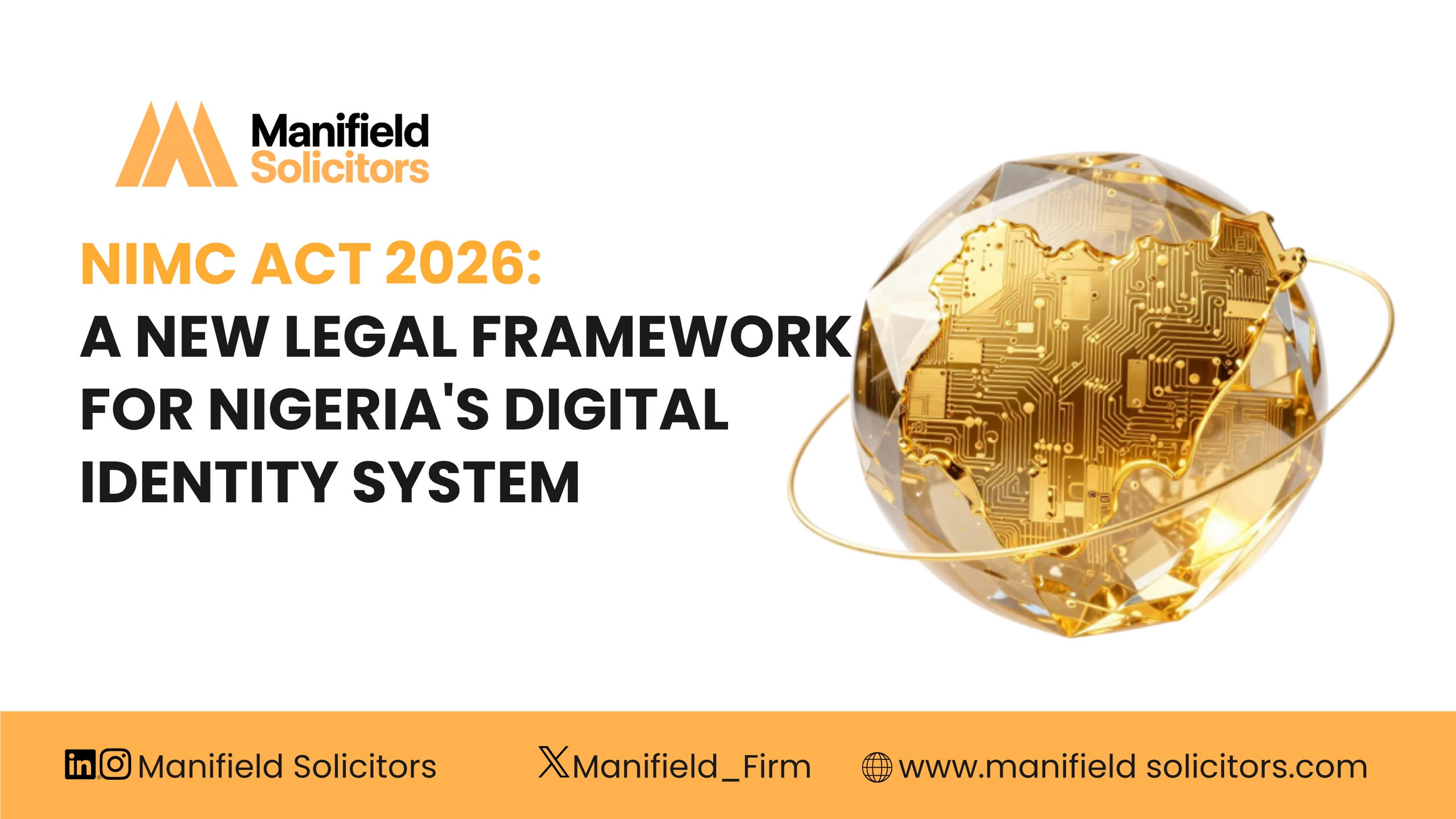
In a press release by the National Identity Management Commission(NIMC) (hereinafter referred to as the Commission) on the 26th day of June 2026, President Bola Ahmed Tinubu signed the NIMC Act 2026 into law. The new legislation introduces a comprehensive legal framework aimed at modernising identity management and supporting Nigeria’s transition to a secure digital economy.
The enactment comes at a time where identity verification has become increasing central to financial services, electronic commerce taxation, national security and telecommunications. Despite the widespread adoption of various means of identification such as the National Identity Number(NIN), international passport, Permanent Voter’s card, driver’s licence, and Bank Verification Number(BVN), the coexistence of multiple identity systems often results in duplication, fragmented verification processes, increased compliance costs and heightened exposure to identity fraud.
This newsletter highlights the key legal reforms introduced and their practical implications for businesses, regulators and the public.
Key Highlights
The Act repeals the 2007 Act which primarily focused on establishing the institutional framework for national identity registration, and adopts a broader approach by creating a comprehensive legal framework for secure digital identity management, electronic authentication, interoperability and digital trust services
- A unified digital identity framework: The Act reinforces the National Identity Number (NIN) as the foundation of Nigeria’s digital identity ecosystem.
- NIMC designated as Nigeria’s Root Certification Authority: The Commission now provides the legal foundation for secure digital authentication, electronic trust services and the National Public Key Infrastructure (PKI).
- Improved interoperability: Government agencies and authorised private-sector organisations are expected to benefit from more efficient and secure identity verification processes.
- Greater emphasis on data protection: The framework complements the Nigeria Data Protection Act 2023 by strengthening safeguards for the processing and protection of identity information.
Implications of the NIMC Act 2026 for Businesses and other Stakeholders
The enactment of the NIMC Act 2026 is expected to reshape Nigeria’s digital landscape with implications extending across virtually all sectors of the economy. Therefore, it is necessary that organisations start assessing how the new framework may affect their operational and compliance obligations.
1. Financial Institutions and Fintech Companies: With the National Identity Number (NIN) serving as the foundation of Nigeria’s digital identity framework, financial institutions are likely to witness greater standardisation in customer onboarding and identity verification processes. Therefore, financial institutions should nevertheless anticipate further regulatory guidance from the Central Bank of Nigeria(CBN), the Nigerian Financial Intelligence Unit (NFIU) and other relevant regulators to align existing customer due diligence frameworks with the new identity management regime.
2. Telecommunications Operators: Telecommunications companies may therefore be required to enhance their verification procedures and continue aligning customer databases with the national identity infrastructure as the integrity of subscriber registration and identity verification processes is expected to be reinforced.
3. Government Ministries, Departments and Agencies: Public institutions may need to increasingly integrate the national identity infrastructure into service delivery, licensing, taxation, healthcare, education, immigration and social intervention programmes.
4. Corporate Organisations and Employers: As digital identity becomes increasingly integrated into commercial transactions, employers and businesses will place greater reliance on electronic verification through authorised identity platforms rather than traditional documentary verification alone. Therefore, businesses should also review their internal data governance policies to ensure that the collection, processing and storage of identity information remain consistent with the Nigeria Data Protection Act 2023and other applicable regulatory requirements.
5. Technology and Digital Service Providers: As digital transformation continues across multiple sectors, organisations offering online services will have to leverage on secure electronic identity verification to strengthen user authentication, reduce fraud and improve customer confidence.
6. Individuals and the General Public: As implementation progresses, the National Identity Number is expected to become increasingly central to interactions involving banking, telecommunications, healthcare, taxation, education and other regulated services. Individuals who have not enrolled for the National Identity Number will experience practical limitations in accessing certain services where identity verification is legally required.
Compliance Considerations
Although the Act establishes the legal framework for a modern digital identity ecosystem, its practical success will depend on effective implementation and sector-specific regulatory guidance. Businesses should therefore begin to:
- review existing customer identification and verification procedures;
- assess whether current identity management systems are compatible with evolving national identity infrastructure;
- strengthen internal data protection and cybersecurity measures;
- monitor regulatory directives issued by NIMC and sector regulators; and
- update internal compliance policies where necessary to align with emerging legal requirements.
Early compliance planning will place organisations in a stronger position to adapt as the implementation of the Act progresses.
Possible Challenges to Implementation
While the NIMC Act 2026 establishes an extensive legal framework for digital identity management, its effectiveness will ultimately depend on successful implementation. Translating legislative reforms into an efficient national identity ecosystem will require sustained collaboration among government institutions, regulators, private sector organisations and the public.
One of the principal challenges is the integration of existing identity databases across government agencies and regulated sectors. Achieving seamless interoperability will require significant technological investment, institutional coordination and harmonisation of operational standards.
Data protection and cybersecurity remain critical. This is so because as reliance on digital identity increases, organisations entrusted with personal information must implement extensive security measures to guard against cyberattacks, identity theft, unauthorised access and other forms of digital fraud. Compliance with the Nigeria Data Protection Act 2023 and other applicable regulatory frameworks therefore remain essential.
Another important consideration is public confidence. The success of any national identity system depends on trust in the security, integrity and confidentiality of personal information. Transparent governance, effective enforcement and continuous public engagement will be necessary to encourage widespread adoption of the digital identity framework.
Conclusion
The enactment of the NIMC Act 2026 majorly affects fintech companies, telecom operators, technology firms, healthcare industries, banks, financial institutions and the general public. The NIMC Act 2026 signals a shift from identity management as an administrative process to identity as national digital infrastructure. This enactment positions Nigeria as a developed and cutting-edge country in the digital economy transition identity from documentary status to a more digital framework.
Although the enactment of the Act assures a developed and digitised form of identity verification, there is a need for trust and data protection to ensure the success of the framework. Stakeholders are, however, enjoined to note the Act’s incorporation with the National Data Protection Act (NDPA)2023, the penalties for unauthorised access, and non-compliance with the NIN usage in transactions going forward.
This newsletter is provided for general information purposes only and does not constitute legal, regulatory, or professional advice. While reasonable care has been taken in preparing this publication, readers are advised not to rely on its contents as a substitute for specific legal advice. Institutions and individuals are encouraged to consult their legal, compliance, or other professional advisers to obtain advice tailored to their particular circumstances.


Add your first comment to this post