



Previously in this Series:In Part 1, we established that Nigeria’s correctional system is confronting a crisis that is simultaneously humanitarian, institutional, and constitutional. We identified overcrowding, the alarming proportion of awaiting-trial inmates, inadequate rehabilitation, and the persistent gap between the aspirations of the Nigerian Correctional Service Act, 2019 and the operational realities on the ground. In this series, we will examine the foundation underlying all these challenges: the physical and institutional infrastructure of Nigeria’s correctional centres. Without urgent attention to that foundation, every other reform effort will remain structurally impossible.
INTRODUCTION
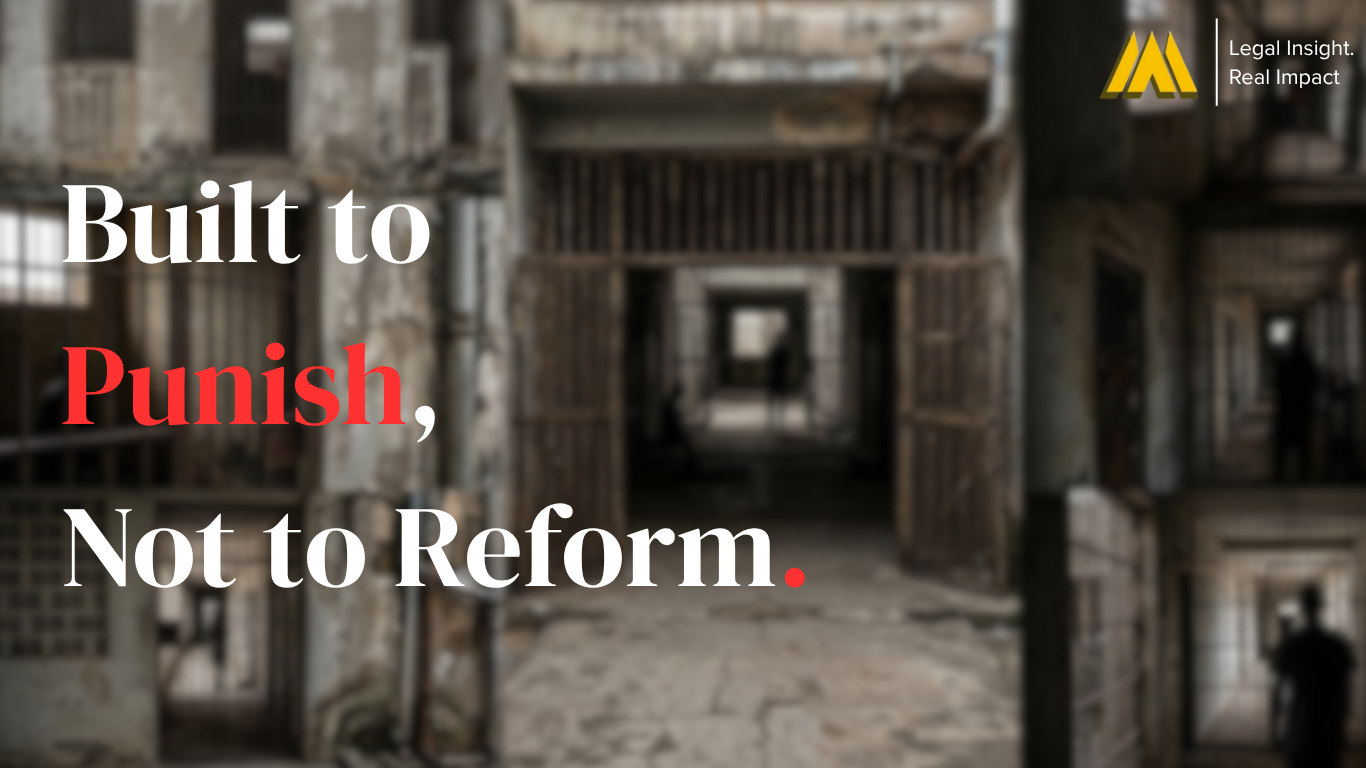
Nigeria’s correctional centres were not built to reform; they were built to hold. The overwhelming majority of custodial facilities currently in operation were constructed during the colonial period, designed with a single purpose in mind, which is to secure detention of persons the colonial administration wished to remove from the community. Reformation, rehabilitation, and reintegration, the statutory mandate of today’s Nigerian Correctional Service, were not architectural considerations when these facilities were designed, and remain afterthoughts in most of the facilities till date. , This calls to action the need to transform the network of colonial-era buildings into modern rehabilitative facilities. This transformation would require funds,planning, political will, and sustained institutional commitment, all of which has been elusive since the Act’s enactment. The result is a correctional system tasked with a 21st-century mandate, yet operating from 19th-century facilities. In many cases, those facilities are literally falling apart.
EDUCATION AS A TOOL OF REHABILITATION
Education is widely recognised as one of the most effective instruments of rehabilitation within a correctional setting. The benefit of education is such that it equips inmates with cognitive skills, vocational competence, and a restored sense of self-worth, all of which are critical to successful reintegration and reduced recidivism. However, the educational mechanisms are missing in Nigeria’s correctional centres.
Among all the failures of Nigeria’s correctional infrastructure, none threatens the future of the system more than the collapse of education. The Nigerian Correctional Service Act, 2019 expressly mandates the provision of programs for “reformation and rehabilitation,” including education and vocational skills. Thus, it beholds a statutory obligation on the Government to implement and uphold.
The custodial centres in Nigeria are bedeviled by various factors, ranging from absence of dedicated classroom space, lack of infrastructure such as furniture, lighting, and other necessary materials, absence of deployed cadre of education officers within the correctional service, absence of standardized curriculum for custodial settings, and absence of formal mechanism for monitoring or accrediting educational delivery within facilities.
Furthermore, in most cases, where such teaching occurs, it is carried out by volunteers, by civil society organisations, or by inmates who possess relevant qualifications in assisting their peers without any institutional support or formal recognition.
THE EDUCATIONAL BARRIER: A CASE STUDY
The failure of education in our correctional centres is clearest when civil society tries to fill the gap that the state has left.
In reference to a prison ministry, BitsbyMani, recently tried to register 120 inmates for the West African Senior School Certificate Examination (WASSCE) who were ready and willing by securing GCE forms for them. However, there was no official channel inside the prisons to render any assistance, which left the ministry with no other alternative than to go through third-party vendors. These vendors were actually offering the forms at a price ₦10,000 higher per form than the cost of purchasing directly from JAMB officials. As of now, the forms have not been bought and the 120 inmates remain unregistered.
This scenario depicts how institutional neglect becomes institutional injustice. There is no reason why prison officials should not have a direct and regulated way to purchase exam forms from JAMB for inmates.
The problem goes deeper than exams as a large number of inmates enter prison unable to read or write and without basic literacy and vocational classes, they come out to the society the same way. The sad outcome is that the chances of securing a job or reintegrating into the society is impossible thereby leading inmates to reoffending. That in turn fuels the sad reality, which is the overcrowding and collapse we see across the prison system today
THE FUNDING GAP
Funding is the major setback to every dimension of the infrastructure crisis described in this article series. There is inadequate funding to ensure that the facilities are renovated, or ensure training and enrolment of qualified
The Nigerian Correctional Service receives a budget allocation that is disproportionately small relative to the scale of the population it manages and the statutory mandate it is required to discharge. Budget releases are frequently delayed, and actual disbursements fall short of approved estimates. Capital budgets for facility construction and renovation are chronically underfunded and subject to diversion by corrupt officials.
There is no enforceable funding basics in the NCSA, no minimum budget allocation, and no mechanism by which the correctional service can compel the treasury to release the funds necessary for statutory compliance.
CONCLUSION
The infrastructure of Nigeria’s correctional centres does not merely fail to support rehabilitation. In its current state, it actively defeats the purpose for which it was established. Changes can only be effected by sustained investment, deliberate planning, enforceable standards, and institutional accountability. None of these has been consistently provided for over years till date.
The crumbling buildings, broken healthcare, poor sanitation and feeding, lack of schools and skills training, and shortage of qualified staff are not separate problems. They are all parts of one big failure: the failure to fund, plan, and properly run Nigeria’s correctional system in line with the law and the Constitution. We cannot rehabilitate inmates in facilities that are harming them.
We cannot claim to uphold the right to dignity in Section 34 of the 1999Constitution when basic humane conditions do not exist.
And we cannot bridge the gap between the promise of the Nigerian Correctional Service Act, 2019 and the reality in our prisons without urgently fixing the infrastructure problem at the root of it all.
In the next parts of this series, we will look at overcrowding, funding, rehabilitation, and legal reform. But every discussion will come back to this same point: in a correctional system, everything depends on the foundation. Everything rests on what the walls can hold, and what happens inside them
Next in the Series: Part 3-Overcrowding: When Correctional Centres Become Pressure Cookers


Add your first comment to this post